Let’s start with an uncomfortable truth: the workplace injuries we take most seriously are the ones we can see. A broken wrist gets a claim form, a risk assessment, maybe a new safety protocol. But the manager who humiliates you in front of the team, the colleague who “jokes” you into silence, the boss who tells you that you’re remembering things wrong — those injuries don’t show up on an incident report. They show up in your brain scan.
That’s the entire premise Dr. Jennifer Fraser has spent the last decade and a half proving, book by book, study by study, whistleblower story by whistleblower story. And it’s about time the rest of us caught up.
The brain doesn’t know the difference
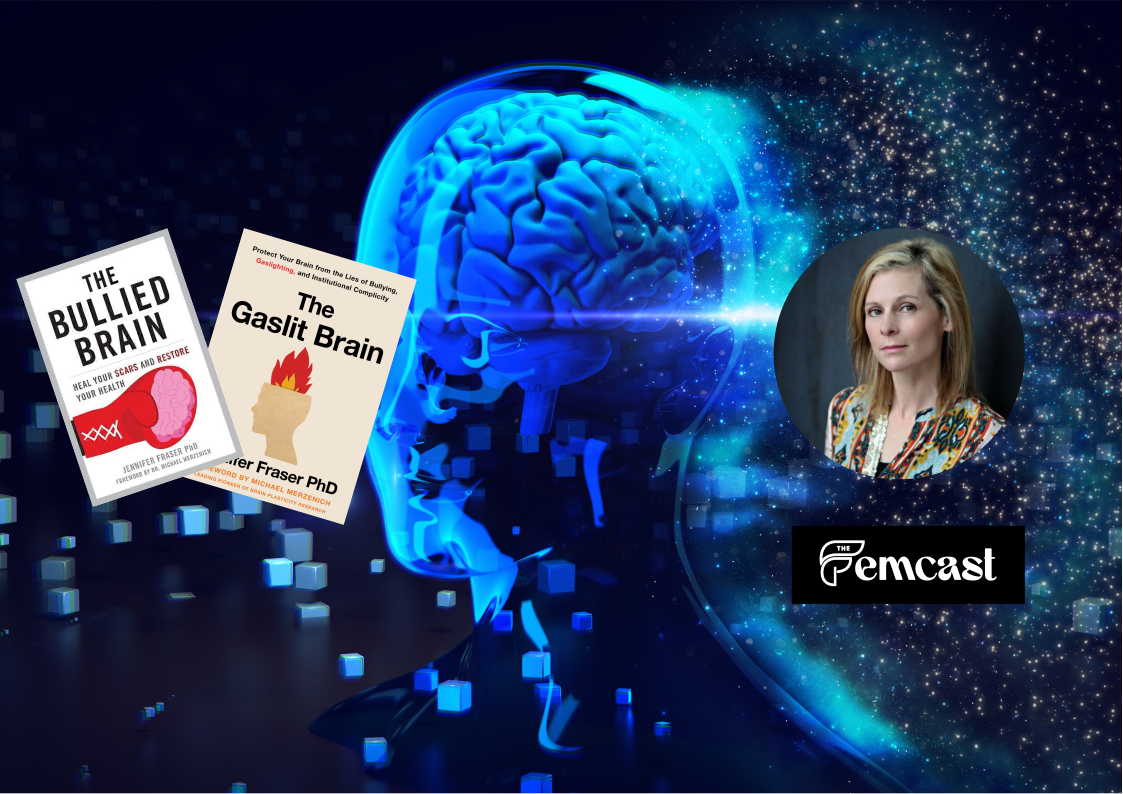
Fraser’s 2022 book, The Bullied Brain: Heal Your Scars and Restore Your Health, pulls together neuroscience, psychiatry and medicine to make one central point: chronic bullying and verbal abuse leave measurable, physical marks on the brain. Not metaphorical scars. Structural ones. Cortisol floods the system, the amygdala stays stuck in high alert, and areas of the brain tied to memory and emotional regulation actually shrink under sustained stress. Neuroscientist Dr. Michael Merzenich, who wrote the foreword, called it the most thorough treatment of the subject “on planet earth” — high praise from the man often credited as the father of neuroplasticity.
Then, in her follow-up, The Gaslit Brain: Protect Your Brain from the Lies of Bullying, Gaslighting, and Institutional Complicity, Fraser takes the thesis somewhere even more unsettling: it’s not just the yelling and the put-downs that damage us. It’s the lying. Repeated, deliberate gaslighting — the kind that makes you doubt your own memory, your own competence, your own sanity — hijacks the very brain functions we rely on to know what’s real. And here’s the kicker: the person doing the gaslighting is changing too. Fraser points to research showing that the more someone tells self-serving lies, the less their amygdala reacts to it. The alarm bell that should signal “this is wrong” gets quieter every time. Deception, in other words, gets easier with practice — for the liar and harder to detect for everyone around them.
Why “resilience training” was never the answer
For years, workplaces have handed the problem back to employees. Build resilience. Manage your stress. Don’t take it personally. Dr Jen Fraser’s research flips that script entirely. If chronic stress and manipulation are physically altering brain structure, then the fix can’t just live in the individual — it has to live in the system. You can’t mindfulness your way out of a boss who is actively rewiring your nervous system.
This is where her Clearsighted Leadership work comes in. Fraser is building what she calls a “neuroparadigm” — a leadership model that treats brain health the same way we’d treat physical safety on a construction site. As she puts it, we already have hard hats and steel-toed boots for our bodies at work. We have nothing for our brains.
So what does this look like in practice, beyond the slogan? A few things Fraser’s work points to again and again:
Truth over control. The old command-and-control leadership model runs on fear, favouritism and silence — the exact conditions that keep everyone’s stress systems switched on. Clearsighted leadership replaces control with transparency: say the true thing, even when it’s uncomfortable.
Naming it, not normalising it. Institutions have a well-worn habit of protecting the person with power and re-victimising the person who speaks up. Fraser has lived this personally as a workplace whistleblower, and it shows up in her writing as a fierce insistence that harm gets named early, not buried in HR paperwork for years.
Believing the target, not the title. If gaslighting works by making people doubt their own perception, then a brain-safe culture has to actively counter that — by listening to the person raising the concern before assuming the senior person’s version is the correct one.
Recovery is possible, and expected. Because of neuroplasticity, none of this is a life sentence. Brains that have been shaped by chronic stress can be reshaped by safety, connection and honest leadership. But recovery needs an environment that stops causing the damage in the first place — you can’t heal a wound that’s still being inflicted.
The bigger shift
What makes Fraser’s work land, especially for women navigating workplaces that have long asked them to be endlessly “resilient,” is that it takes the burden off the person being harmed and puts it where it belongs: on the culture and the leadership creating the conditions for harm in the first place. Psychological safety isn’t a nice-to-have, a value on a poster in the break room. It’s neurological. It’s measurable. And increasingly, thanks to Fraser’s research, it’s undeniable.
The brain scan doesn’t lie. Maybe it’s time our workplaces stopped either.
Listen here to The Gaslit Brain series On The Femcast Podcast with Dr Jen Fraser on Spotify and YouTube
Subscribe to The FEMCAST and help us bring these critical stories to light. Each listener, each voice, and each story makes a difference. Together, we can break the silence.
If you enjoy our content and would like to support our research and work, consider buying me a coffee. Your contribution helps me continue creating this content. Thank you for your support!